



Finansal piyasalara adım atan pek çok yatırımcının aklındaki ilk soru genellikle “Hangi hisseyi almalıyım?” veya “Nasıl daha çok kazanabilirim?” olur. Ancak yıllarını piyasalarda geçirmiş deneyimli profesyonellerin odaklandığı asıl soru bambaşkadır: “Sahip olduğum sermayeyi nasıl koruyabilirim?” Borsada kalıcı başarının ve sürdürülebilir büyümenin sırrı, ne kadar kazandığınızda değil, ne kadar kaybetmemeyi başarabildiğinizde gizlidir. Bu rehberde, portföyünüzü dalgalı piyasalarda bir kalkan gibi koruyacak risk yönetimi prensiplerini, karmaşık terimlere boğulmadan, uygulanabilir bir çerçevede ele alacağız.
Risk Gerçekte Nedir?
Çoğumuz riski yalnızca “para kaybetme ihtimali” olarak tanımlama eğilimindeyiz. Oysa finans literatüründe risk, yatırımınızın beklediğiniz getiriden sapma olasılığıdır. Bu sapma elbette aşağı yönlü (kayıp) olabileceği gibi, yukarı yönlü (beklenenden fazla kazanç) de olabilir. Belirsizlik ile riski birbirine karıştırmamak gerekir; belirsizlik ölçülemezken, risk ölçülebilir ve yönetilebilir bir olgudur. Başarılı bir yatırımcı, riski yok sayan değil, onu tanıyan, ölçen ve kendi stratejisine uygun şekilde yöneten kişidir.
Piyasalarda temel olarak iki tür riskle karşılaşırsınız. İlki, tüm piyasayı etkileyen ve kaçınılması zor olan “Sistematik Risk”tir (örneğin küresel salgınlar veya faiz kararları). İkincisi ise belirli bir şirkete veya sektöre özgü olan “Sistematik Olmayan Risk”tir (örneğin bir şirketin kötü bilanço açıklaması). İşte tam bu noktada yatırımcının en güçlü silahı devreye girer: Çeşitlendirme.
Tarihten Çıkarılacak Dersler
Geçmiş, piyasaların gelecekte nasıl davranabileceğine dair bize paha biçilmez ipuçları sunar. Borsa tarihi, aşırı iyimserlik ve ardından gelen sert düşüş döngüleriyle doludur.
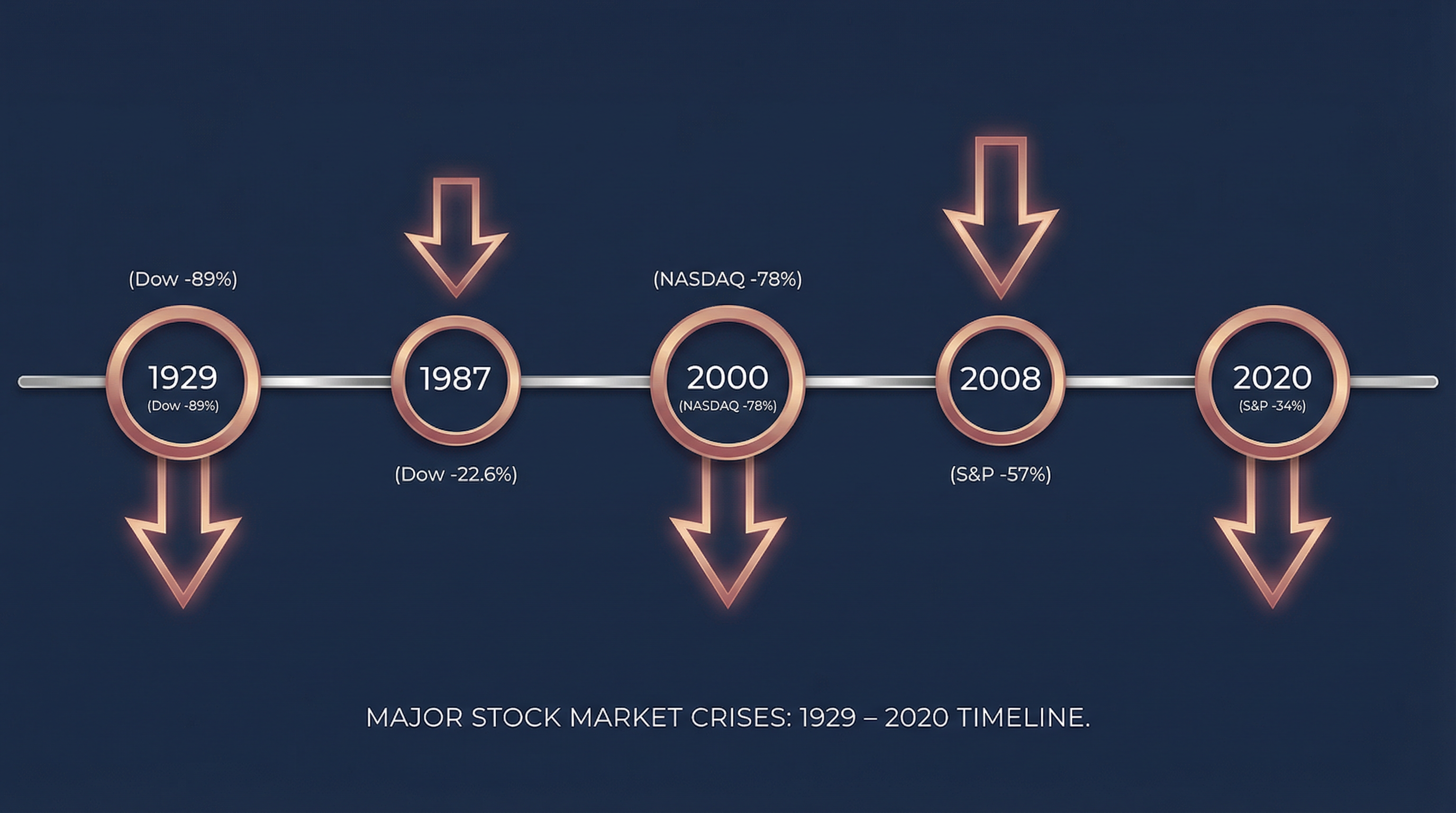
1929 Büyük Çöküşü bize borçla (kaldıraçlı) yatırım yapmanın ne kadar tehlikeli olabileceğini gösterdi. Sadece %10 sermaye ile girilen işlemler, piyasa döndüğünde yatırımcıların tüm varlıklarını silip süpürdü. 2000 yılındaki Dot-Com balonu, sadece iyi bir hikayenin sağlam bir iş modelinin yerini tutamayacağını öğretti. 2008 Küresel Finans Krizi ise karmaşık finansal ürünlerin ardında gizlenen risklerin, tüm sistemi nasıl çökertebileceğini kanıtladı. En yakın örneğimiz olan 2020 COVID-19 şoku ise, piyasaların ne kadar hızlı çökebileceğini ama aynı zamanda merkez bankalarının müdahalesiyle ne kadar hızlı toparlanabileceğini gösterdi.
Tüm bu krizlerin ortak bir paydası vardır: Panik satışı yapan yatırımcılar her zaman en büyük zararı görmüş, uzun vadeli planına sadık kalıp soğukkanlılığını koruyanlar ise kriz sonrasındaki yükselişlerden faydalanabilmiştir.
Çeşitlendirme: Yumurtaları Tek Sepete Koymamak
Nobel ödüllü ekonomist Harry Markowitz’in Modern Portföy Teorisi ile matematiksel temellerini attığı çeşitlendirme, yatırım dünyasının yegane “bedava öğle yemeği” olarak kabul edilir. Mantık oldukça basittir: Farklı yönlerde hareket eden varlıkları bir araya getirdiğinizde, portföyünüzün toplam riski düşer.
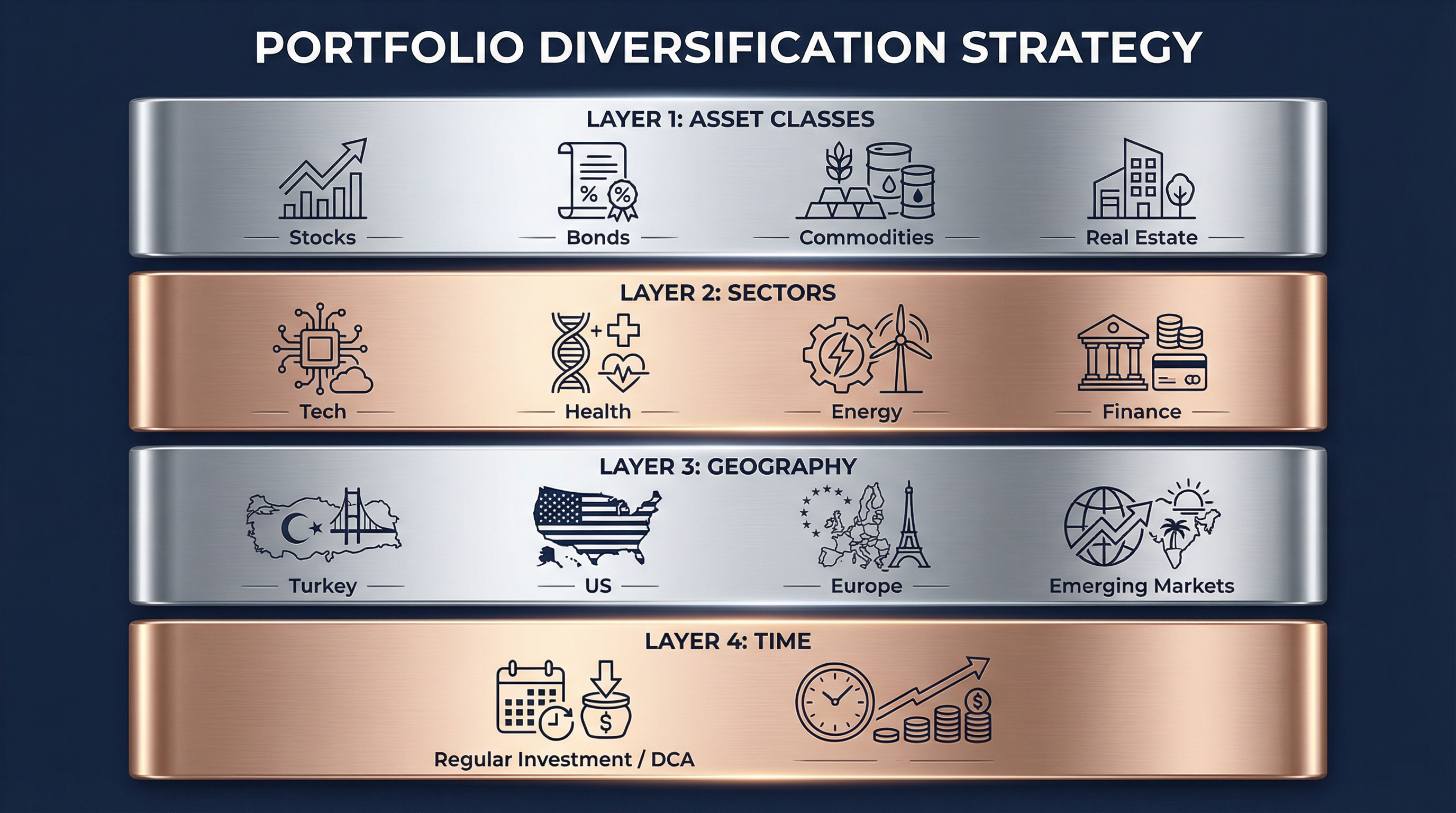
Gerçek bir çeşitlendirme sadece farklı şirketlerin hisselerini almakla olmaz. Varlık sınıfları arasında (hisse, tahvil, altın, gayrimenkul), sektörler arasında (teknoloji, sağlık, enerji) ve coğrafyalar arasında dağılım yapmanız gerekir. Burada kilit kavram “korelasyon”dur. Kriz anlarında birbirine zıt veya bağımsız hareket eden varlıkları seçmek, portföyünüzün bir kalesi yıkılırken diğerlerinin ayakta kalmasını sağlar.
Portföy Riskini Ölçmek ve Yönetmek
Risk yönetimi sadece felsefi bir yaklaşım değil, aynı zamanda sayısal bir disiplindir. Portföyünüzün röntgenini çekmenizi sağlayan bazı temel araçlar vardır:
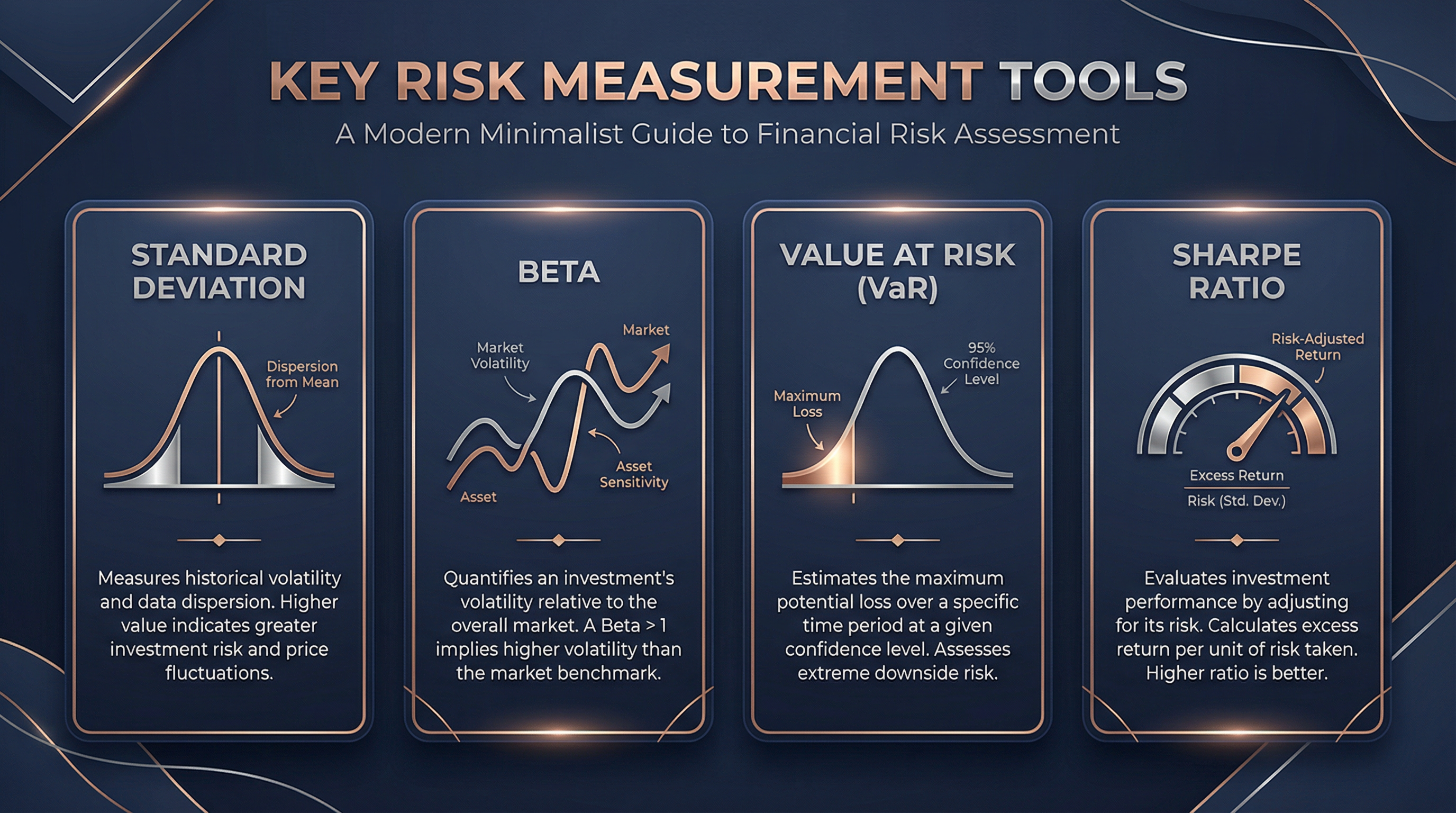
Standart Sapma: Yatırımınızın ortalama getirisinden ne kadar saptığını, yani ne kadar oynak olduğunu gösterir. Yüksek standart sapma, yüksek risk demektir.
Beta Katsayısı: Hissenizin piyasa geneline (örneğin BIST 100 endeksine) göre ne kadar hareketli olduğunu ölçer. Betası 1’den büyük olan hisseler piyasa yükselirken daha çok kazandırır, düşerken daha çok kaybettirir.
VaR (Riske Maruz Değer): Belirli bir güven düzeyinde (örneğin %95 ihtimalle) en kötü gününüzde ne kadar kaybedebileceğinizi tahmin etmenize yarar.
Sharpe Oranı: Aldığınız her bir birim riske karşılık, ne kadar ekstra getiri elde ettiğinizi göstererek yatırımınızın verimliliğini ölçer.
Yatırımcı Psikolojisi ve Acil Eylem Planı
Tüm bu teknik araçlara rağmen, yatırımcının en büyük düşmanı genellikle kendi duygularıdır. Davranışsal finans araştırmaları, insanların kayıp acısını, kazanç sevincinden çok daha yoğun hissettiğini ortaya koyuyor.
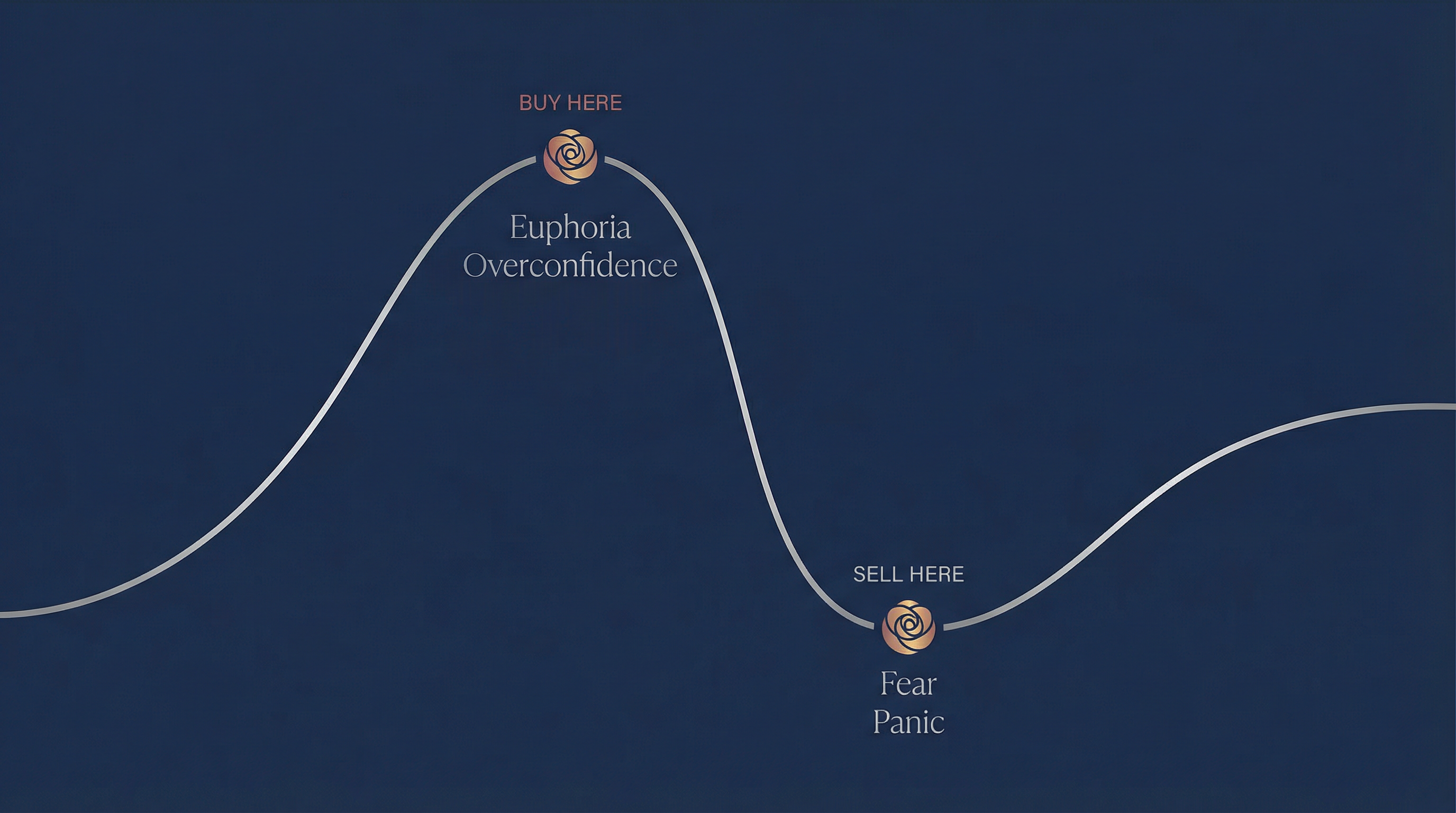
Bu psikolojik yapı, bizi piyasanın en coşkulu ve pahalı olduğu dönemlerde alım yapmaya, en korkulu ve ucuz olduğu dönemlerde ise panikle satış yapmaya iter. Bu kısır döngüyü kırmanın tek yolu, duygularınızdan arınmış, kurallara dayalı bir sistem kurmaktır.
Piyasa sert bir düşüş yaşadığında ilk yapmanız gereken şey hiçbir şey yapmamaktır. Ekranı kapatın, derin bir nefes alın ve 24-48 saat bekleyin. Bu süre zarfında portföyünüzü gözden geçirin ve düşüşün nedenini analiz edin. Önceden belirlediğiniz “Stop-Loss” (Zarar Kes) seviyelerine uyun ve tek bir işlemde toplam sermayenizin %1-2’sinden fazlasını asla riske atmayın.
Unutmayın, başarılı bir yatırım yolculuğu sprint değil, maratondur. Kendi risk profilinizi doğru tanımak, hedeflerinize uygun bir varlık dağılımı yapmak ve kriz anlarında soğukkanlılığınızı korumak, sizi piyasadaki dalgalanmalardan koruyacak en sağlam zırhınız olacaktır.
Bilinçli ve istikrarlı yatırımlar dilerim.
Arashan KOZA
Yatırım Uzmanı & Analist
www.arashankoza.capital | | araskoza@gmail.com

The Secret to Lasting Success in the Stock Market: A Risk Management Guide

When most people first step into the financial markets, their initial question tends to be “Which stock should I buy?” or “How can I make more money?” Yet seasoned professionals who have spent decades navigating these waters focus on an entirely different question: “How do I protect what I already have?” The real secret to lasting success and sustainable growth in the stock market lies not in how much you earn, but in how well you manage not to lose. In this guide, we will walk through the core principles of risk management in a practical, jargon-free framework that can serve as a shield for your portfolio in turbulent markets.
What Is Risk, Really?
Most of us tend to define risk simply as “the chance of losing money.” In financial terms, however, risk is the probability that your investment will deliver a return different from what you expected. That deviation can certainly be downward (a loss), but it can also be upward (a gain exceeding your expectations). It is important not to confuse uncertainty with risk; uncertainty cannot be measured, whereas risk can be quantified and managed. A successful investor is not someone who ignores risk, but someone who recognizes it, measures it, and manages it in a way that fits their own strategy.
In the markets, you will encounter two fundamental types of risk. The first is Systematic Risk (also known as Market Risk), which affects the entire market and is nearly impossible to avoid — think global pandemics, central bank interest rate decisions, or geopolitical conflicts. The second is Unsystematic Risk, which is specific to a particular company or sector — such as a poor earnings report or a management scandal. This is precisely where the investor’s most powerful weapon comes into play: Diversification.
Lessons From History
The past offers us invaluable clues about how markets may behave in the future. Stock market history is filled with recurring cycles of excessive optimism followed by sharp corrections.
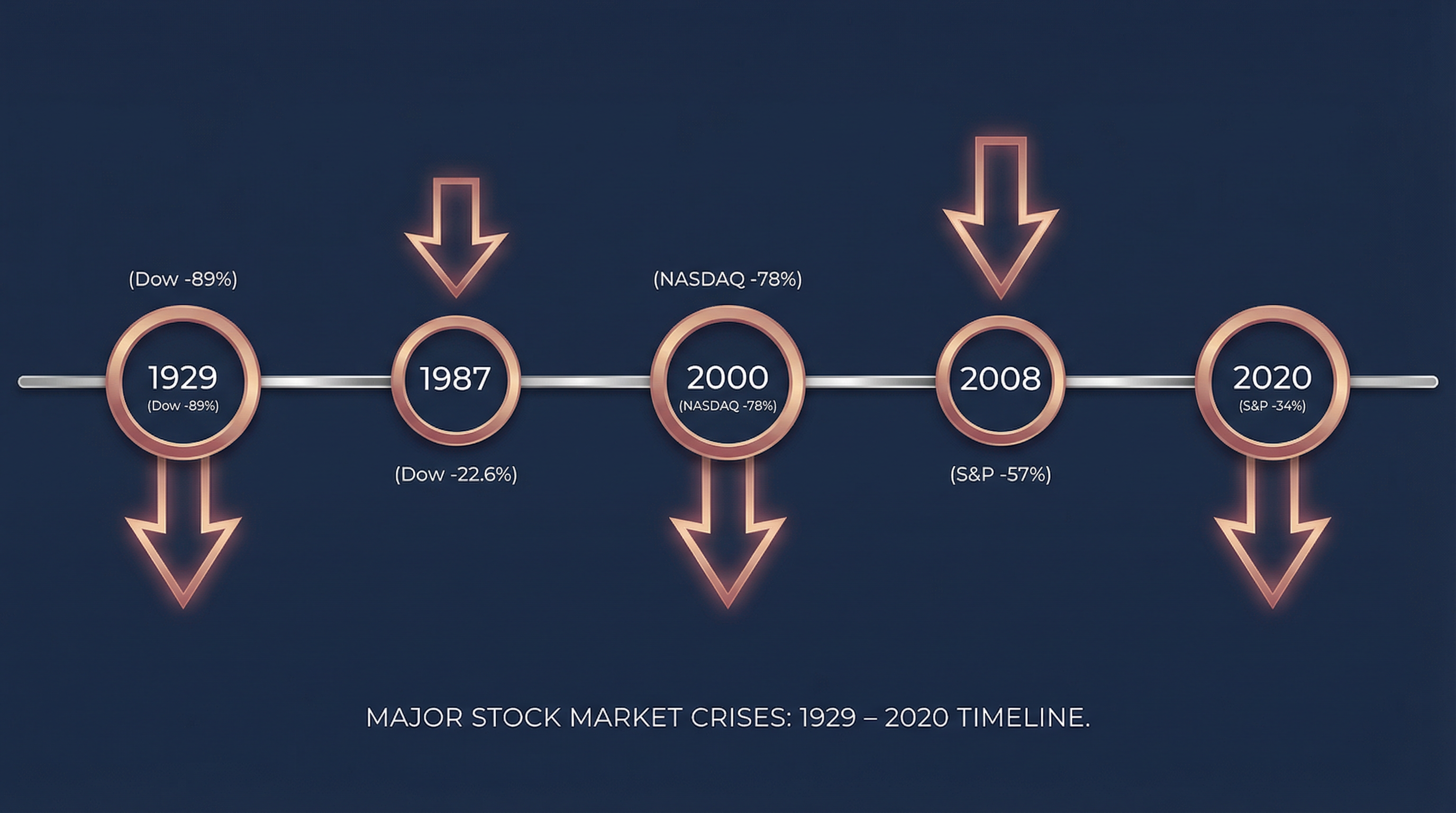
The Great Crash of 1929 taught us how dangerous leveraged (margin-based) investing can be. Investors who entered positions with just 10% of their own capital saw their entire wealth wiped out when the tide turned. The Dow Jones plummeted 89% over three years, unemployment soared to 25%, and it took a full 25 years for the market to recover to its previous peak.
The Dot-Com Bubble of 2000 demonstrated that a compelling story can never substitute for a sound business model. The tech-heavy NASDAQ lost 78% of its value as hundreds of internet companies with no viable path to profitability went bankrupt.
The 2008 Global Financial Crisis proved that complexity hides risk rather than eliminating it. Toxic mortgage-backed securities, packaged and sold across the globe, brought the entire financial system to the brink of collapse. The S&P 500 fell 57% over 17 months, and the U.S. government was forced to deploy a $700 billion bailout package.
Our most recent example, the 2020 COVID-19 Shock, showed how rapidly markets can crash — the S&P 500 dropped 34% in just 33 days — but also how quickly they can recover when central banks and governments intervene decisively. The market reclaimed its losses in only five months.
All of these crises share a common denominator: investors who panic-sold consistently suffered the greatest losses, while those who stayed calm and stuck to their long-term plan were able to benefit from the recoveries that followed — without exception.
Diversification: Don’t Put All Your Eggs in One Basket
Diversification, whose mathematical foundations were laid by Nobel Prize-winning economist Harry Markowitz through his Modern Portfolio Theory, is widely regarded as the only “free lunch” in the world of investing. The logic is straightforward: when you combine assets that move in different directions, the total risk of your portfolio decreases.
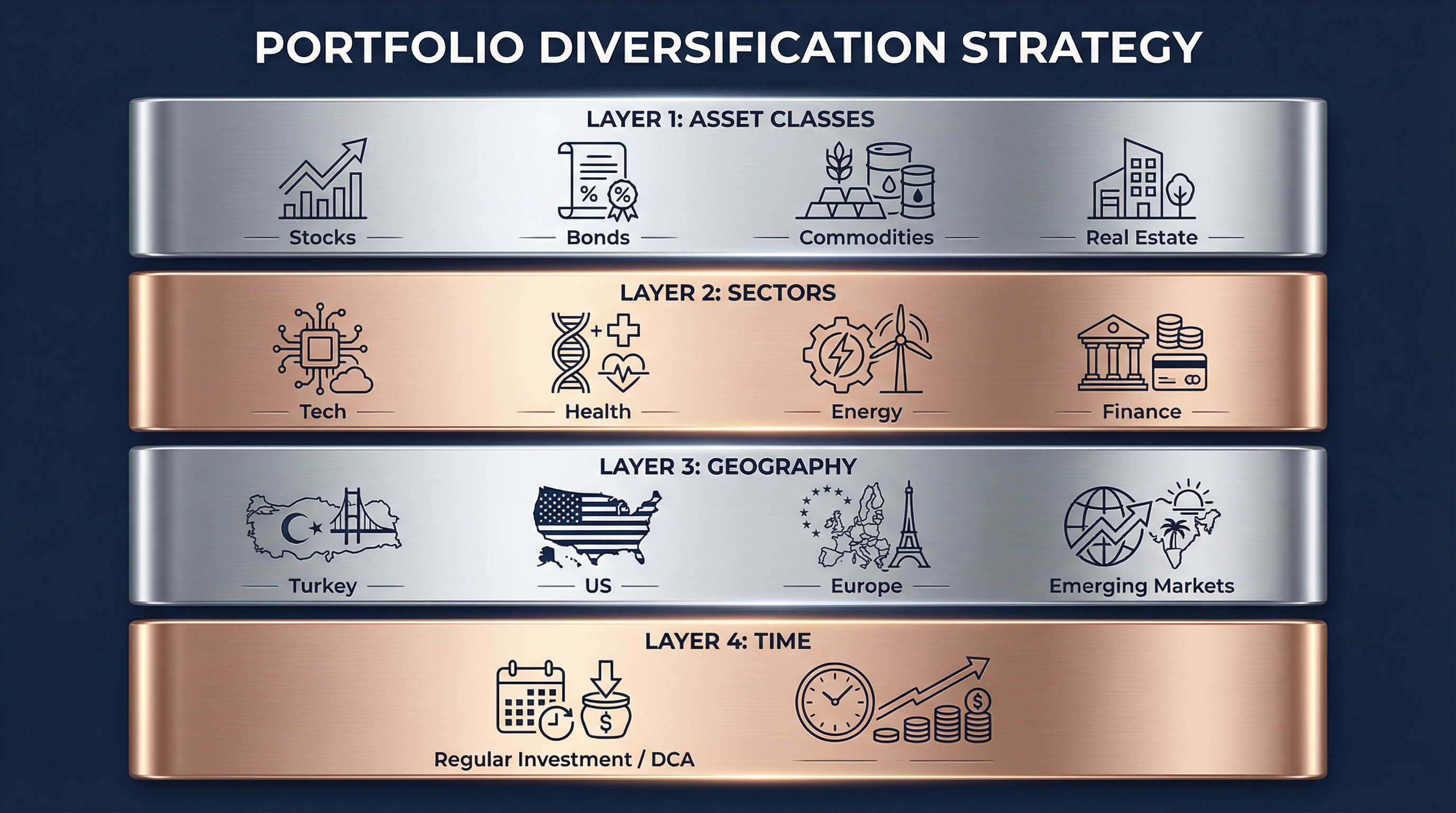
True diversification is not achieved simply by buying shares of different companies. You need to spread your investments across asset classes (stocks, bonds, gold, real estate), across sectors (technology, healthcare, energy, finance), and across geographies (domestic, U.S., European, and emerging markets). The key concept here is correlation. Selecting assets that move independently or in opposite directions during a crisis ensures that when one pillar of your portfolio crumbles, the others remain standing.
An important caveat: during severe market stress, correlations between assets tend to rise. Assets that normally move independently can fall together during a panic. This is why diversification should be designed with the worst days in mind, not the best.
Measuring and Managing Portfolio Risk
Risk management is not just a philosophical approach — it is a quantitative discipline. There are several essential tools that allow you to take an X-ray of your portfolio:
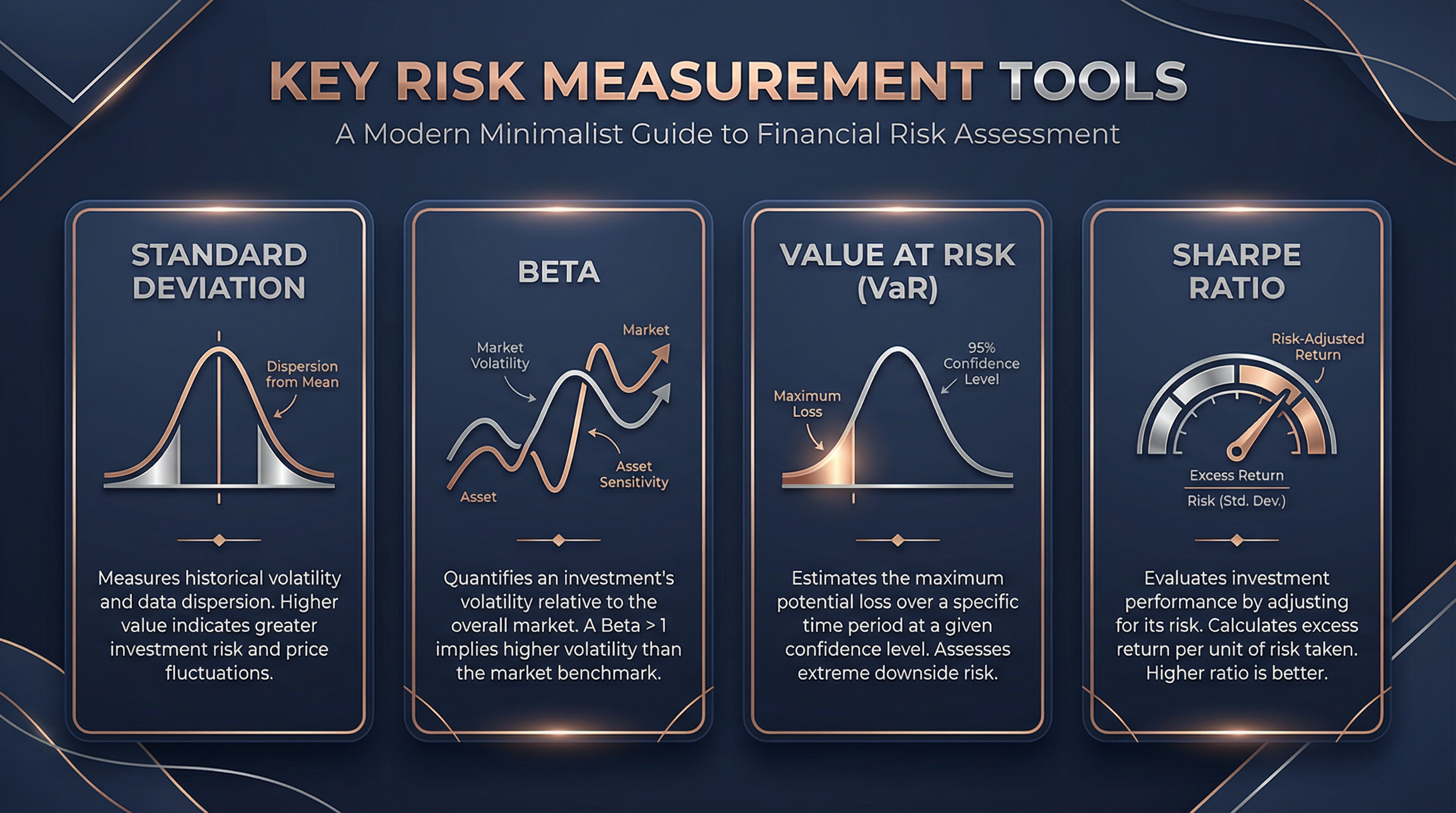
Standard Deviation measures how much your investment’s returns deviate from their average, essentially quantifying volatility. A high standard deviation means high risk. For example, an investment with an average return of 10% and a standard deviation of 15% means that roughly 68% of the time, your returns will fall between -5% and +25%.
Beta measures how sensitive your stock is to overall market movements. A beta greater than 1.0 means the stock amplifies market swings — it gains more in rallies but loses more in downturns. A beta below 1.0 indicates a more defensive, less volatile position.
Value at Risk (VaR) estimates the maximum amount your portfolio could lose within a given time frame at a specific confidence level. For instance, “a 1-day VaR of $5,000 at 95% confidence” means that on 95 out of 100 trading days, your daily loss will not exceed $5,000.
Sharpe Ratio evaluates the efficiency of your investment by measuring how much excess return you earn for each unit of risk taken. A Sharpe ratio above 1.0 is generally considered acceptable, while above 2.0 indicates strong risk-adjusted performance.
Investor Psychology and Your Emergency Action Plan
Despite all these technical tools, an investor’s greatest enemy is often their own emotions. Behavioral finance research has shown that the pain of loss is felt approximately twice as intensely as the joy of an equivalent gain.
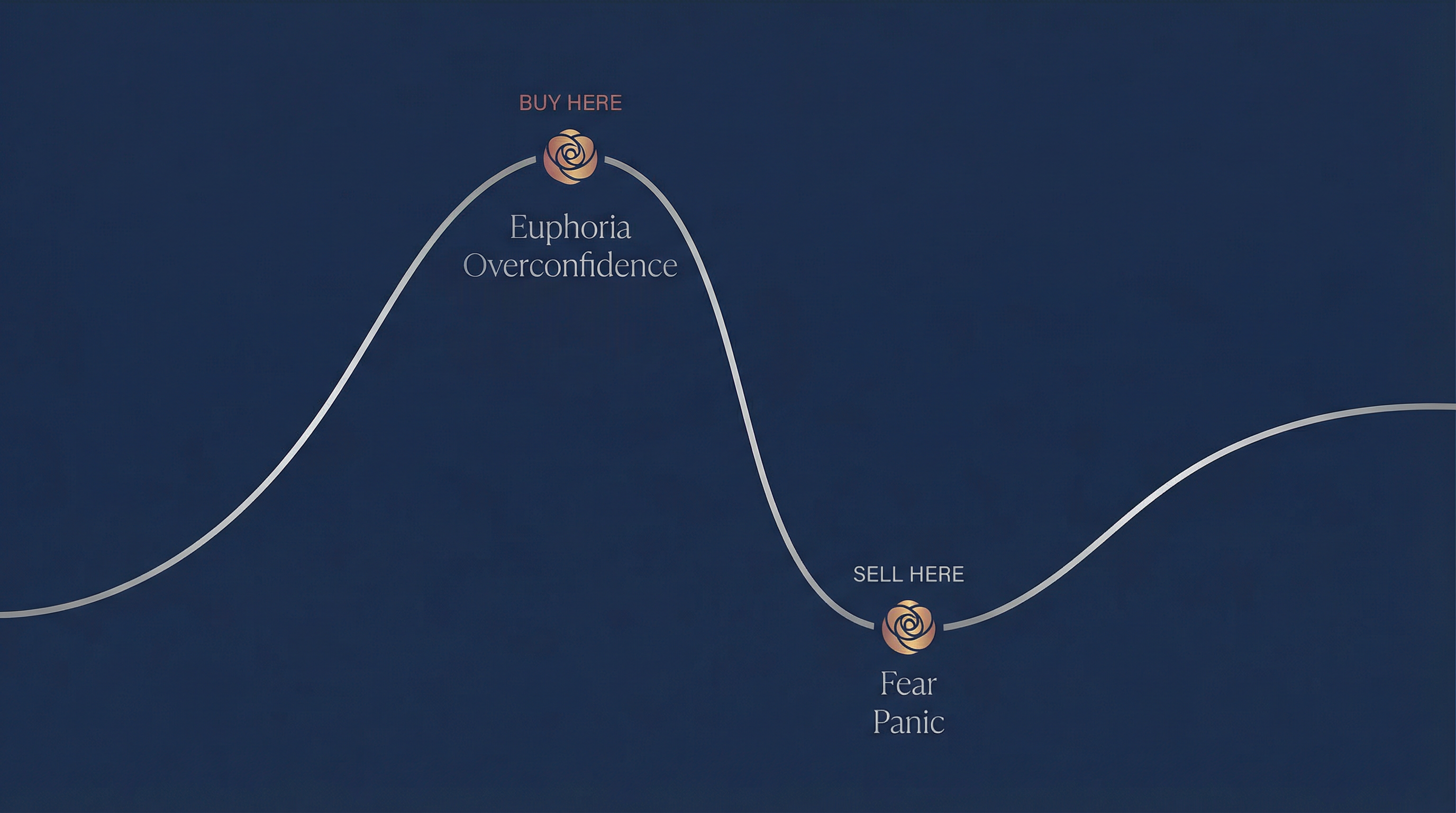
This psychological wiring pushes us to buy during the most euphoric and expensive periods of the market, and to panic-sell during the most fearful and cheapest moments. The only way to break this vicious cycle is to build a rules-based system that operates independently of your emotions.
When the market experiences a sharp decline, the first thing you should do is nothing. Close the screen, take a deep breath, and wait 24 to 48 hours. During that time, review your portfolio and analyze the cause of the decline. Stick to the Stop-Loss levels you set in advance, and never risk more than 1-2% of your total capital on a single trade.
Remember, a successful investment journey is a marathon, not a sprint. Accurately identifying your own risk profile, building an asset allocation that aligns with your goals, and maintaining composure during crises will be the strongest armor protecting you from market turbulence.
Wishing you informed and steady investments.
Arashan KOZA
Investment Specialist & Analyst